

The Brothers That Just Do Gutters · Buckhead & West Atlanta
Summer storm gutter prep for Buckhead and West Atlanta, built for red clay.
NOAA rainfall frequency data says a Buckhead storm can drop 1.18 inches in 30 minutes about once every two years, and July is the stormiest month on the Atlanta calendar. That water comes off the roof fast and lands on red Georgia clay that takes it in slowly. If your gutters spill or your downspouts dump at the wall, the runoff cuts into the yard and finds the foundation. We size the system for the downpour and send the water downhill.
- Free written estimates
- Seamless gutters formed on site
- Serving Buckhead, West Atlanta and the metro
Ready for the afternoon downpour.
One visit, everything below done.
- Full cleaning and downspout flush
- Overflow points found and fixed
- 6 inch gutters where 5 cannot keep up
- Downspouts routed off the clay and downhill
- BroGuard so storm debris stays out
Quick answer
Summer Storm and Red Clay Drainage Prep in Buckhead and West Atlanta, GA: Atlanta summer storms are short and hard: NOAA Atlas 14 puts a two-year Buckhead storm at 1.18 inches in 30 minutes, and Georgia red clay takes that water in slowly, so runoff from the roof runs across the yard and gathers at the foundation. The Brothers That Just Do Gutters Buckhead & West Atlanta preps homes with cleanings, 6 inch gutters and larger 3×4 downspouts where 5 inch systems overflow, downspouts routed downhill or into underground drainage, and BroGuard fine metal mesh guards. Estimates are free. Call (770) 213-1621 or book online.
By the numbers
Atlanta summer rain comes in bursts. The numbers show how hard.
The National Weather Service office in Peachtree City tracks when Atlanta storms happen, and NOAA tracks how much falls and how fast. These figures are theirs, not ours.
- 27daysof thunder at Atlanta in an average June, July and August, more than half the year, per NWS Peachtree City
- 10.3thunderstorm days in an average Atlanta July, the stormiest month of the year, per NWS Peachtree City
- 1.18inof rain in 30 minutes, the storm Buckhead should expect about once every two years, per NOAA Atlas 14
- 4.75inof rain in an average July at Hartsfield-Jackson, the wettest month of the year in NOAA’s normals
Sources: NWS Peachtree City, A Severe Weather Climatology for North and Central Georgia; NOAA Atlas 14 Precipitation Frequency Data Server, Buckhead point estimate; NOAA NCEI 1991 to 2020 normals, Hartsfield-Jackson Atlanta International Airport.
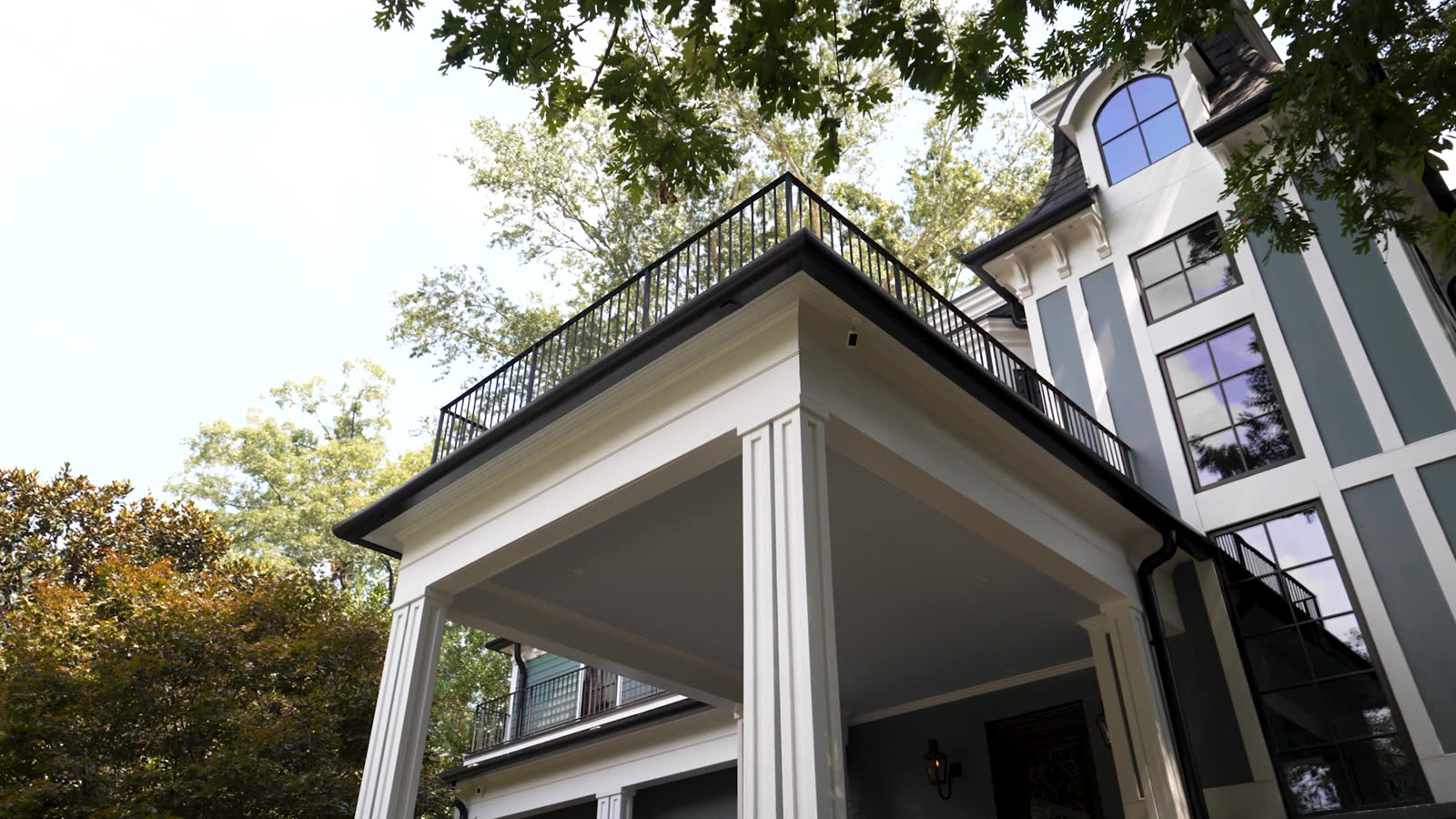
What a summer storm does here
A 30 minute storm, a full roof, and clay that will not drink.
An Atlanta summer storm rarely lasts long. It builds in the heat of the day, and the Weather Service says the most likely time for wind damage in the stormy months is mid afternoon through early evening. Then it unloads. NOAA Atlas 14 puts the two-year storm in Buckhead at 0.83 inch in 15 minutes and 1.18 inches in 30, a pace of about 3.3 inches an hour at its peak. At that rate every 1,000 square feet of roof sends about 34 gallons a minute to the gutters, and a big Buckhead roof can send several times that. Then the ground has to take it. Much of the Piedmont sits on soils like the Cecil series, which USDA describes as red clay from about 8 inches down to 42, and UGA Extension warns that soils high in clay, or compacted during building, may not have the capacity to infiltrate well. So the water runs. A gutter that spills or a downspout that ends at the wall turns a short storm into a stream across the lawn and a pool against the foundation.
Get storm-ready nowWhat it does to an Atlanta house
A hard summer storm finds every weak point on the roofline.
Gutters are the drainage system for your roof. In a storm that drops an inch in half an hour, they decide whether that water reaches the street or soaks the clay around your house.
- 01
Overflow at the front lip
A 5 inch gutter fed by a long roof or a valley can fill faster than its downspout drains, and the water sheets over the front edge onto beds, walks and steps.
- 02
Water at the foundation
Clay takes water in slowly. A downspout that empties at the wall leaves roof water sitting at the foundation, under the slab edge and in the crawlspace long after a 30 minute storm has passed.
- 03
Erosion on hilly lots
On a sloped Buckhead or Vinings lot, a downspout aimed at the hill cuts a channel in the clay, washes out beds and carries red silt onto the driveway and street.
- 04
Debris knocked loose mid-storm
Storm wind strips oak leaves, pine straw and sweetgum balls off the trees and drops them in the trough when the gutter needs to be open most. Fine metal mesh keeps them on top.
The storm drainage visit
Storm-ready in one visit, gutter to outlet.
A Solutionist walks the roofline and follows every downspout to where it ends, then the crew does the work the same day whenever possible. You get a written report of what was cleaned, what was fixed and where the water should go.
Book a Storm Drainage Check(770) 213-1621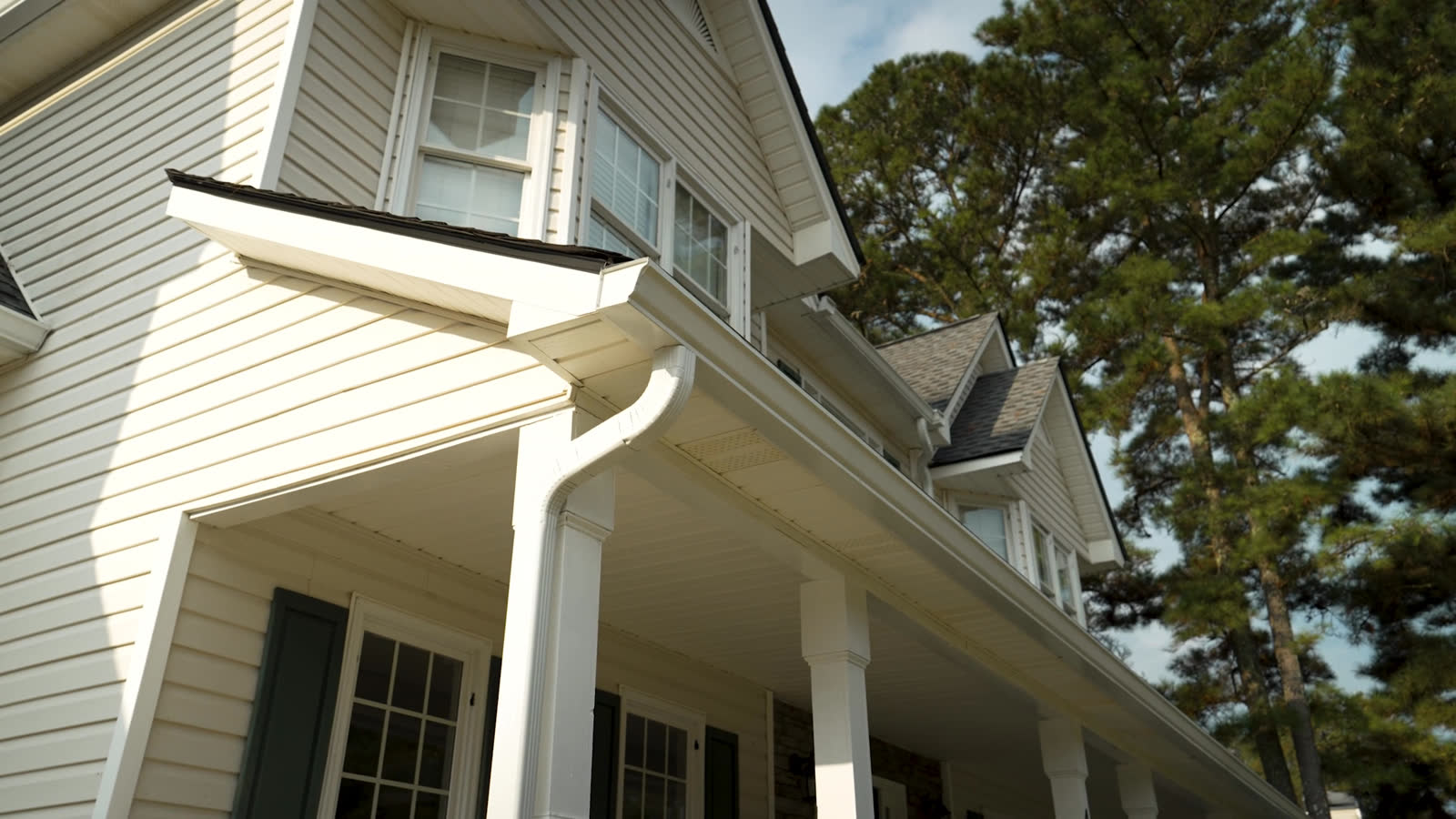
- Same-daymost cleanings and repairs finished on the first visit
- Writtenreport and estimate before any work is approved
- Localcrews out of Thornton Road in Lithia Springs, local phone number: (770) 213-1621
- Clean and flush every runTroughs cleared by hand, downspouts flushed with water, outlets checked for full flow.
- Find the overflow pointsValleys, long runs and inside corners where storm water jumps the front lip get marked and fixed.
- Upsize where it overflows6 inch gutters carry about 40 percent more than 5 inch, and 3×4 downspouts have twice the opening of 2×3.
- Add downspouts on the long runsRuns over about 40 feet, or roof sections draining to one drop, get a second outlet so a downpour has two ways out.
- Route water off the clayExtensions or underground drainage that carry roof water downhill, away from the foundation and the slope.
- Install BroGuardFine metal mesh that keeps storm-blown leaves and pine straw out while heavy rain runs straight through.
What the experts say
The forecasters and the soil scientists covering Atlanta point to the same weak spot: where roof water lands.
The National Weather Service office in Peachtree City has tracked when north Georgia storms happen for decades, NOAA measures how hard the rain falls, and UGA Extension studies what Georgia clay does with it. Put together, they explain why summer storms here are a drainage problem first.
NWS Peachtree City
July brings the most thunderstorms
The Weather Service says thunderstorms are more common in July than in any other month. Atlanta averages 8.6 thunderstorm days in June, 10.3 in July and 8.0 in August.
NWS Peachtree City
Mid afternoon through early evening
That is when the Weather Service says wind damage is most likely in the stormy months. It is also when a gutter full of loose leaves gets tested.
UGA Extension
“May not infiltrate well”
UGA Extension’s warning about soils high in clay or compacted during building. Roof water that lands on clay mostly runs off instead of soaking in.
NOAA Atlas 14, Buckhead
1.18 inches in 30 minutes
The rain a Buckhead storm should produce about once every two years. The ten-year storm brings 2.11 inches in an hour. Gutters sized for a drizzle do not keep up with either.
Sources: NWS Peachtree Citysevere weather climatology, UGA Extension Bulletin 101, Rain Gardens in Home Landscapes, NOAA Atlas 14 rainfall data.
Checklist
Your summer storm gutter checklist for Buckhead and West Atlanta
This is the same list our crews work through on a storm drainage visit. Do what you can from the ground, and call us for anything that needs a ladder.
- Clear every gutter by handOak leaves, pine straw, pollen sludge and the red clay grit that washes off the roof all settle at the outlets and slow the drain right when a storm peaks.
- Flush and test every downspoutA downspout choked at the elbow backs a storm up into the gutter and over the front, usually above a door, a walk or the front steps.
- Check pitch, hangers and seamsWater standing after a flush means a run has lost its slope. Drips at corners or end caps mean a seam has opened.
- Size up valleys and runsWhere two roof planes meet, or a run passes 40 feet on one drop, a 5 inch gutter overflows in a hard storm. A 6 inch gutter or a second downspout fixes it.
- Get the water off the clayCarry every downspout away from the house to ground that falls away, or into an underground line, so roof water does not soak the clay at the foundation.
- Respect the slopeOn hilly lots, never point a downspout straight down the hill or at a neighbor. Send it to a stable, downhill outlet, and add a line where open ground would wash out.
- Protect the troughBroGuard fine metal mesh keeps leaves and pine straw out between cleanings, so the gutter is open when an afternoon storm hits at its hardest.
- Book it in the off seasonThunderstorms are least common in winter, and the stretch from fall into spring is the easiest time to resize gutters and dig drainage lines before June.
Sources: NWS Peachtree City severe weather climatology, NOAA Atlas 14 Precipitation Frequency Data Server, Buckhead point estimate.
Hilly lots and creek ravines
On a sloped lot, the downspout decides where the clay goes.
Much of this territory is rolling Piedmont ground. Buckhead lots fall toward Peachtree Creek and Nancy Creek, Vinings climbs the hills above the Chattahoochee River, and older streets in Smyrna, Marietta and Mableton are full of houses built into a grade. The soil under the topsoil is mostly red clay; USDA’s description of the Cecil series, a common Piedmont upland soil, lists red clay from about 8 inches to 42 inches down. Clay that sheds water also moves when enough water runs across it. A downspout that empties onto a slope digs a gully, undercuts walks and carries red silt down the drive. UGA Extension even tells homeowners not to put rain gardens on slopes over 12 percent. We route each downspout to a stable outlet below the house, add drops where long runs need them, and use underground drainage where open runoff would wash out the hill.
Sources: USDA NRCS Official Soil Series Description, Cecil, UGA Extension Bulletin 101, Rain Gardens in Home Landscapes.
Services
More Ways We Help Buckhead Homeowners
Related services from the same local crews.
Aluminum, copper and bonderized gutters formed on site to the exact length of your roofline, in 5, 6 and 7 inch sizes.
Learn more Gutter CleaningGutters and downspouts cleared by hand, flushed and tested. We do not blow debris onto your lawn or porch.
Learn more Gutter RepairLeaking seams, sagging runs, loose hangers and rotted fascia, repaired the same visit when possible.
Learn more BroGuard Gutter GuardsFine metal mesh that stops oak leaves, pine straw and sweetgum balls while summer downpours flow through.
Learn more Underground DrainageDownspouts tied into buried lines that carry roof water downhill and away from the foundation and the clay.
Learn more Maintenance ProgramScheduled cleanings after the spring pollen and the fall leaf drop so your system is ready for storm season.
Learn moreHow it works
What Happens on Cleaning Day
- 1Pick a date
Call or book online and we set the visit ahead of storm season.
- 2Clear by hand
The crew scoops each trough and bags everything that comes out.
- 3Flush and watch
Water goes down every downspout until it runs clear at the outlet.
- 4Report and sweep
You hear about anything worn or loose, and the walks get swept.
Why the Brothers
Why Buckhead and West Atlanta Homeowners Call the Brothers
Debris comes out by hand and leaves in bags. Your porch, windows and siding stay clean.
Because the work is done by hand, someone trained is looking at every foot of the run. Small adjustments happen on the spot, and bigger fixes go on a written estimate.
We look at roof size, valleys and slope, then recommend 6 inch gutters, 3×4 downspouts or an extra drop only where a hard storm will overflow what you have.
Matthew Prewett’s crews work out of Thornton Road in Lithia Springs, so the team on your roof knows Atlanta clay, hills and trees.
Year-round
Your Atlanta gutter calendar
How the year plays out on metro Atlanta rooflines, and what our crews are doing in each stretch.
- Fall · Sep to NovLeaf drop clean-outs
Oak leaves, pine straw and sweetgum balls cleared from troughs and outlets before the winter rains settle in.
- Winter · Dec to FebWinter rain calls
Some of the wettest weeks of the Atlanta year. Overflow, clog and pulled-loose calls handled ahead of the next front.
- Spring · Mar to MayPollen season
The yellow coat of pine and oak pollen flushed out of the outlets, and BroGuard installed before summer.
- Summer · Jun to AugThunderstorm season
Short, heavy afternoon storms. Downspout upgrades, underground drainage and new seamless gutters sized for the burst.
The Work
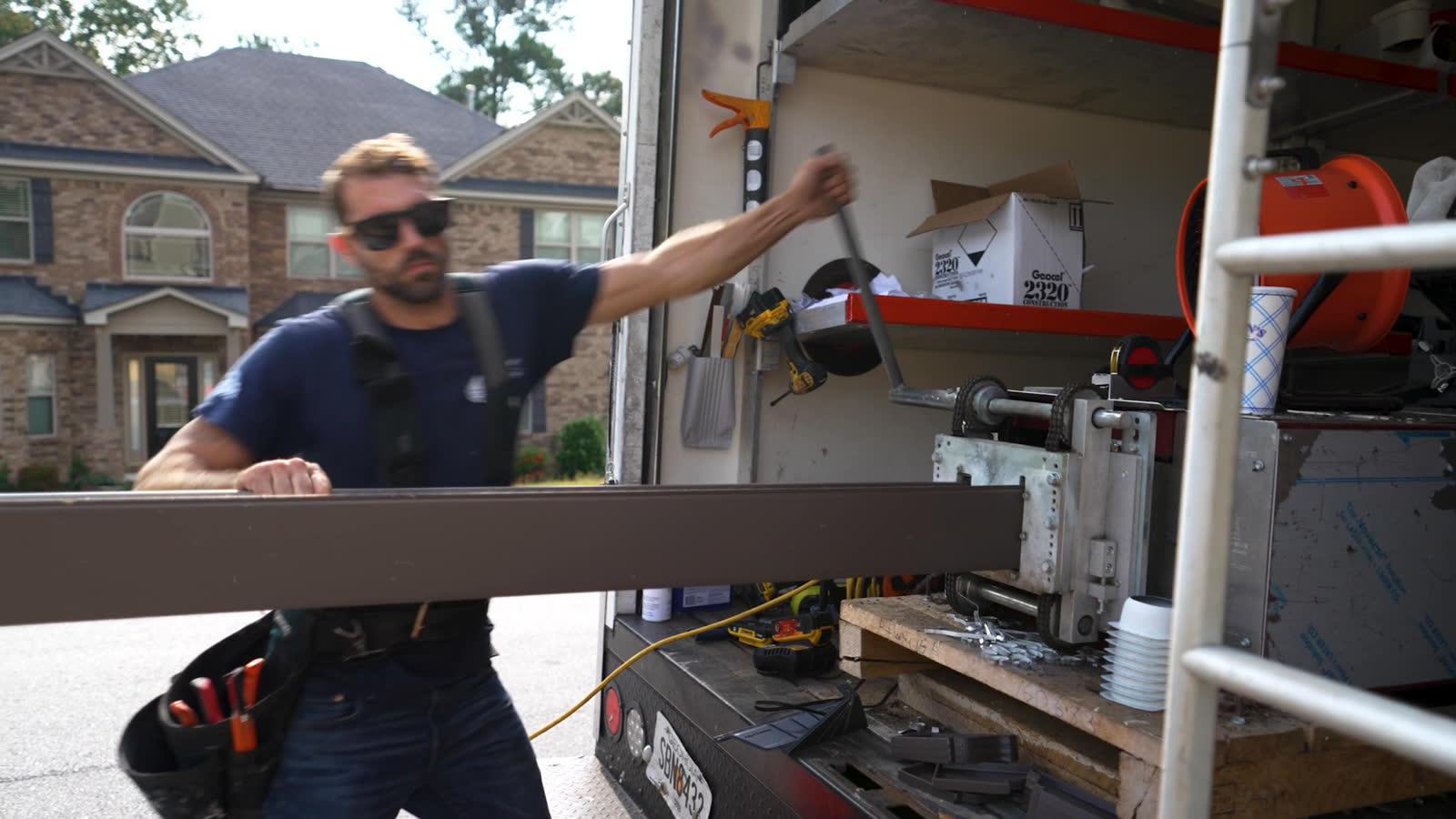
Real Crews. Real Buckhead and West Atlanta Homes.

Reviews
What Atlanta Homeowners Say
“Matthew is a complete professional. Great service. Competitive pricing. Highly recommend.”
Posted on Google“Everything was very smooth from the beginning to the end. It was very easy to schedule someone to come out and get a quote for gutter guards. I was able to schedule the installation the following week. Matthew also kept me updated throughout the whole process. Communication was great !”
Posted on Google“I highly recommend Brothers Gutters. The process is straight forward; quote, schedule, install. I was wait listed for a sooner installation and got it. I discovered a small omission after the fact and a crew stopped by the next day to take care of it. Very accommodating! I’m a happy customer.”
Posted on GoogleService area
Buckhead and West Atlanta communities we serve
Every community on this list is inside our service area and gets the same local crew, seamless gutters formed on site and free written estimates. Call (770) 213-1621 or request a free quote and a Solutionist will come out.
- Acworth
- Austell
- Avondale Estates
- Brookhaven
- Brooks
- Buckhead
- Cartersville
- Chamblee
- Clarkston
- Dallas
- Decatur
- Doraville
- Douglasville
- Downtown Atlanta
- Druid Hills
- Dunwoody
- East Atlanta
- Emerson
- Experiment
- Fairburn
- Fairmount
- Fayetteville
- Grant Park
- Griffin
- Hampton
- Haralson
- Hiram
- Inman Park
- Kennesaw
- Kirkwood
- Lithia Springs
- Mableton
- Marietta
- Midtown
- Newnan
- Northlake
- Palmetto
- Peachtree City
- Powder Springs
- Rydal
- Sandy Springs
- Scottdale
- Senoia
- Sharpsburg
- Smyrna
- Tyrone
- Vinings
- Virginia-Highland
- West Atlanta
- West Midtown
- White
- Winston
Frequently Asked Questions
About 13.6 inches from June through August at Hartsfield-Jackson Atlanta International Airport, based on NOAA’s 1991 to 2020 normals: 4.54 inches in June, 4.75 in July and 4.30 in August. July is the wettest month of the year there. Atlanta averages about 50.4 inches of rain a year, and much of the summer total falls in short, heavy thunderstorms rather than long, steady rain.
Thunderstorms are most common from June through August, and July is the peak. The National Weather Service office in Peachtree City counts an average of 8.6 thunderstorm days at Atlanta in June, 10.3 in July and 8.0 in August, about 27 of the year’s roughly 50. In those months the Weather Service says wind damage is most likely from mid afternoon through early evening.
Start with a full cleaning and a flush of every downspout, then find the spots that overflow in a hard rain: valleys, long runs and inside corners. Upsize to 6 inch gutters and 3×4 downspouts where a 5 inch system cannot keep up, add a second drop on long runs, and carry every downspout off the clay to a downhill outlet or underground line. BroGuard fine metal mesh keeps storm-blown leaves out.
Between fall and late spring, before thunderstorms ramp up in June. Thunderstorms are least common in winter, which makes it the easiest time to resize gutters and route drainage. A Solutionist walks the roofline and the crew does the work the same day whenever possible, with a written report first. Call (770) 213-1621 for a free estimate.
Because clay takes water in slowly. UGA Extension notes that soils high in clay, or compacted during construction, may not have the capacity to infiltrate well, and USDA describes Piedmont soils like the Cecil series as red clay from about 8 to 42 inches down. When a downspout dumps on that ground, the water pools at the foundation or runs across the yard, carrying clay with it.
Usually because the storm delivers water faster than the system can drain it. NOAA Atlas 14 puts a two-year Buckhead storm at 0.83 inch in 15 minutes, about 34 gallons a minute off every 1,000 square feet of roof at its peak. A 5 inch gutter on a long run or below a valley, draining to one 2×3 downspout, can fill and spill over the front even when it is perfectly clean.
On large or steep roofs, long runs and anywhere a valley feeds the gutter, often yes. A 6 inch gutter carries about 40 percent more water than a 5 inch one, and pairing it with 3×4 downspouts doubles the opening of a standard 2×3. Big Buckhead roofs and newer two-story homes in Smyrna and Marietta are where we recommend it most. We form them on site in 5, 6 and 7 inch sizes.
Away from the house and toward ground that keeps falling, to an outlet that will not wash out. Never send a downspout straight down a bare slope, where it will cut a gully in the clay. On steep lots, or where a walk or drive is in the way, an underground line carries the water to a stable spot below the house.
A buried pipe tied to the bottom of a downspout that carries roof water away from the house to a downhill outlet. It keeps water off the foundation with nothing lying across the lawn, and it suits sloped lots where open runoff would erode the clay.
Sometimes, but it has to be built for clay. UGA Extension sizes rain gardens at about 10 to 15 percent of the draining area on clay soils, roughly twice the 5 to 8 percent used on sandy soil, and recommends replacing poorly draining clay with a better mix. UGA also advises against rain gardens on slopes greater than 12 percent or inside the dripline of large trees.
After a hard rain, look for gullies cut below downspout outlets, a fan of red silt across the driveway or sidewalk, exposed roots near the house, and dirt streaks on the outside face of the gutter where water spilled over. A spot that stays soggy for days next to the foundation is another sign. Any one of these means roof water is landing where it should not.
Yes, if they are the right kind. Storm wind strips oak leaves, pine straw and sweetgum balls loose mid-storm, and BroGuard fine metal mesh keeps them on top while heavy rain runs through, so the gutter stays open at the peak. BroGuard carries a limited lifetime warranty.
Free estimates
Ready for gutters that can handle an Atlanta summer storm and the red clay below?
Free, no-pressure estimates from local Solutionists. Cleanings, 6 inch upgrades, downspout routing and BroGuard protection scheduled before storm season, and seamless gutters formed at your home when a run needs replacing.
The Brothers That Just Do Gutters · Buckhead & West Atlanta · (770) 213-1621 · Based in Lithia Springs, serving Buckhead, West Atlanta and the metro, GA
Locally Owned in Lithia Springs, GA · A+ Rated by the BBB